

Two German Cancer Prizes for Researchers at Heidelberg Medical Faculty
Press release from the Heidelberg Medical Faculty of the Heidelberg University
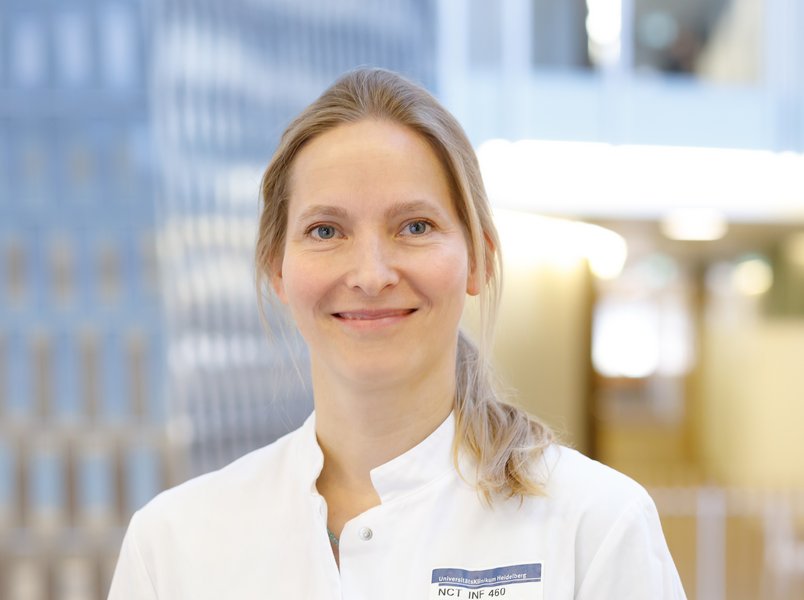
Professor Dr Jessica Hassel, of Heidelberg Medical Faculty at Heidelberg University and Head of the Skin Tumour Centre at Heidelberg University Hospital and the National Centre for Tumour Diseases (NCT) Heidelberg, is the winner in the ‘Clinical Research’ category. Professor Dr Dr Felix Sahm, also of the Heidelberg Medical Faculty, Department of Neuropathology at Heidelberg University Hospital and a researcher at the German Cancer Research Centre, is being honoured in the “Translational Research” category alongside a researcher from Charité – Universitätsmedizin Berlin. This was announced today by the German Cancer Society. The award ceremony will take place on 19 June 2026 in Berlin.
New treatment options for malignant melanoma and the precise classification of certain brain tumours using ‘molecular fingerprinting’: these are the two areas of research for which two researchers from Heidelberg University’s Faculty of Medicine will be awarded the prestigious German Cancer Prize in 2026.
Dermatologist Prof. Dr Jessica Hassel, Head of the Skin Tumour Centre at Heidelberg University Hospital and the National Centre for Tumour Diseases (NCT) Heidelberg, who has been among the world’s most cited scientists for several years, will receive the German Cancer Prize in the ‘Clinical Research’ category. Together with her team, she has conducted internationally acclaimed studies on immunotherapies and combination therapies for advanced melanoma, paving the way for new treatments to be put into practice.
The research findings of neuropathologist Prof. Dr. Dr. Felix Sahm, Deputy Medical Director of the Department of Neuropathology at Heidelberg University Hospital (UKHD), have now also found their way into clinical practice. The classification system for meningiomas developed by him and his team is based on molecular markers in the tumour cells’ genome, known as methylation, and is now recommended in international diagnostic guidelines. He shares the prize in the “Translational Research” category with Prof. Dr David Capper from Charité – Universitätsmedizin Berlin.
The prize awarded by the German Cancer Society and the German Cancer Foundation is one of the highest honours in oncology and is presented annually in the categories ‘Clinical Research’, ‘Translational Research’, ‘Experimental Research’ and ‘Health Services Research’. ‘On behalf of the Executive Board, I congratulate Professor Hassel and Professor Sahm on this important and well-deserved award. Their work is an outstanding example of how a broad spectrum of cancers is both successfully treated and researched in a forward-looking manner at Heidelberg University Hospital, with a focus on the benefit to patients,” says Prof. Dr Hanns-Peter Knaebel, Chairman of the Executive Board of Heidelberg University Hospital.
“The work of Professor Hassel and Professor Sahm impressively demonstrates how scientific excellence and patient-oriented research interact at Heidelberg University Medical Centre. With their high-quality studies, both have made a decisive contribution to the further development of evidence-based diagnostics and therapy for severe cancers. They embody a culture of translational research that rapidly and responsibly translates innovations into patient care and underscores the close cooperation with our partners at the German Cancer Research Centre and the NCT,” says Prof. Dr Michael Boutros, Dean of the Heidelberg Medical Faculty at Heidelberg University.
Novel immunotherapies and patient-centred research in skin cancer
Professor Jessica Hassel is successfully committed to developing new therapeutic approaches for patients with advanced skin cancer, as well as to patient-centred care in dermato-oncology. Her focus is on clinical trials investigating the use of innovative immunotherapies. Among other things, Prof. Hassel has helped to develop and test therapies using ‘cancer vaccines’, which support the immune system in the fight against skin cancer, or the bispecific agent tebentafusp. Tebentafusp is used in the treatment of melanoma of the eye. It links tumour cells with specific immune cells, which then destroy the cancer cells. The dermatologist has also established new “liquid biopsy” methods, in which specific cancer markers are measured in the blood to monitor the course of treatment. A particular priority for Prof. Hassel is to support patients in making difficult medical decisions by providing them with appropriately prepared information. To this end, she has developed and tested online decision-making tools for people with advanced skin cancer. The service is available free of charge online to all those affected. Further information on Professor Hassel can be found via this link (in German).
Molecular classification of brain tumours improves diagnosis and treatment
Both Prof. Sahm and Prof. Capper, former colleagues in the Department of Neuropathology at the UKHD, were honoured for their pioneering contributions to the molecular diagnosis of brain tumours. Their work has fundamentally transformed the classification and risk assessment of these cancers and now forms the basis for modern, targeted treatment approaches. Whilst Prof. Capper focuses on molecular analyses of gliomas and other tumours of the central nervous system, Prof. Sahm specialises in meningiomas, tumours of the meninges. Using new molecular analysis methods in combination with machine learning, he identified numerous new subgroups of meningiomas. This enables a more precise classification than is possible based solely on histological tissue assessment – a prerequisite for tailored therapeutic approaches. These findings have been incorporated into international guidelines.
Prof. Sahm has also developed a combined analysis of molecular markers from tumour and immune cells to enable a more precise risk assessment. In preliminary work, he and his team demonstrated that not only the molecular properties of the tumour cells, but also those of the immune cells that have migrated into the tumour tissue, significantly shape the molecular tumour profile – and provide insights into the prognosis. The methods he has developed for accelerated data collection also open up avenues for intraoperative classification. Further information on Professor Sahm can be found via this link (in German).
Heidelberg University Hospital and Faculty of Medicine: Internationally Renowned Patient Care, Research and Teaching
Heidelberg University Hospital (Universitätsklinikum Heidelberg, UKHD) is one of the largest and most prestigious medical centers in Germany. The Medical Faculty of Heidelberg University (Medizinische Fakultät Heidelberg, MFHD) belongs to the internationally renowned biomedical research institutions in Europe. Both institutions have the common goal of developing new therapies and implementing them rapidly for patients. Heidelberg University Hospital and the Medical Faculty of Heidelberg University employs around 14.500 employees and is committed to providing trainings and qualifications. Every year, around 86,000 patients and more than 1.100.000 outpatient cases are treated in more than 50 clinical departments with almost 2.500 beds.
Together with the German Cancer Research Center (Deutsches Krebsforschungszentrum, DKFZ) and the German Cancer Aid, the UKHD established the first National Center for Tumor Diseases (NCT) in Heidelberg. The goal is to provide care at the highest level as an oncology center of excellence and to rapidly transfer promising approaches from cancer research to the hospital. In addition, the UKHD operates in partnership with the DKFZ and the University of Heidelberg the Hopp Children’s Cancer center Heidelberg (KiTZ), a unique and nationally known therapy and research center for oncological and hematological diseases in children and adolescents.
The Heidelberg Curriculum Medicinale (HeiCuMed) is one of the top medical training programs in Germany. Currently, there are about 4.000 future physicians studying in Heidelberg.
www.klinikum.uni-heidelberg.de
Julia Bird
Acting Head of Corporate Communications and Press Officer
Tel. +49 6221 56-7071
julia.bird@med.uni-heidelberg.de