

from10.03.2026
Advanced melanoma: Antibodies in the blood indicate side effects of immunotherapy
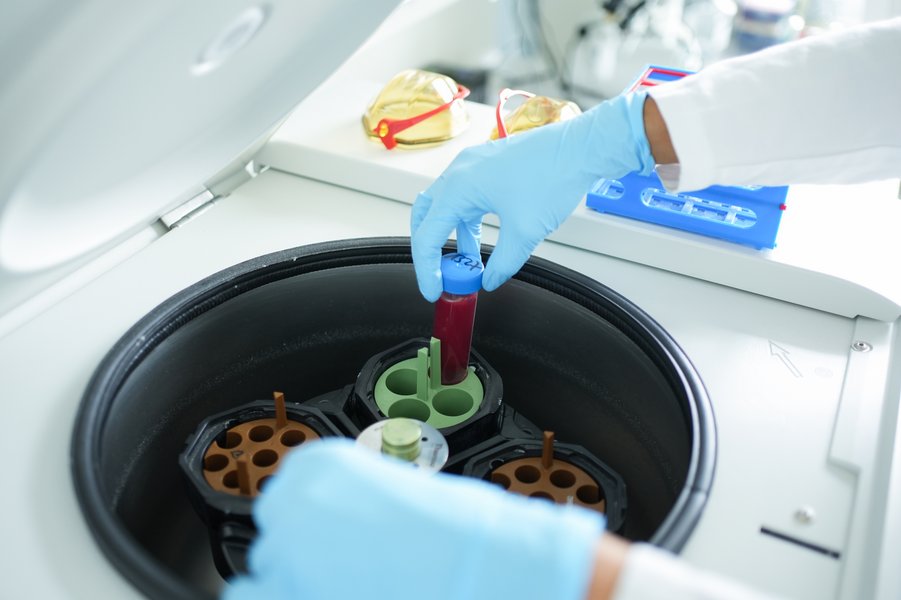
Immunotherapies have greatly improved the treatment of metastatic melanoma, but they can cause serious side effects. A study led by researchers from Heidelberg University's Medical Faculty, the Dermato-Oncology Section of the Dermatology Clinic at Heidelberg University Hospital, and the National Center for Tumor Diseases (NCT) in Heidelberg now shows that autoantibodies detected in the blood before the start of therapy could help to better assess the individual risk of side effects in patients.
The National Center for Tumor Diseases (NCT) Heidelberg is a joint institution of the German Cancer Research Center (DKFZ), the Heidelberg University Hospital (UKHD), the Heidelberg Medical Faculty of the Heidelberg University and the Thoraxklinik Heidelberg.
Immunotherapies have fundamentally changed the treatment of advanced black skin cancer (metastatic melanoma) in recent years. They can activate the body's own defense system in such a way that it specifically recognizes and fights tumor cells. But this effect also has a downside: during treatment, many patients develop so-called autoantibodies that target the body's own healthy tissue. This can result in serious side effects, such as inflammation of the intestines, skin, or other organs. Until now, there have been few reliable ways to predict who is particularly at risk before treatment begins.
A new multicenter study now provides evidence that certain autoantibodies were already present before treatment and were later associated with the occurrence of side effects. The researchers examined blood samples from 331 patients with metastatic melanoma who received various forms of immunotherapy.
In doing so, the researchers found a number of autoantibodies that coincided with an increased risk of immune-related side effects. Of particular interest was that the amounts of autoantibodies formed differed in their composition depending on the type of immunotherapy used. This suggests that side effects do not always arise according to the same principle, but that different biological mechanisms play a role depending on the therapy.
One focus of the study was on intestinal inflammation, which can be one of the most stressful complications and occurred significantly more frequently with combination immunotherapy than with monotherapy. Here, too, the team identified autoantibodies that reliably reflected the risk across different forms of treatment.
Some antibodies were associated with a higher risk, while others appeared to have a protective effect. Jessica Hassel, head of the Dermato-Oncology Section at the Dermatology Clinic of Heidelberg University Hospital (UKHD), NCT Heidelberg, is leading the study.
She says of the work: "In the future, an autoantibody profile from a blood sample could help to better assess the personal risk of severe side effects under different immunotherapies even before the start of immunotherapy. This would allow us to make more informed decisions about which therapy is best suited for a patient—for example, whether combined immunotherapy is safe. If we know who is particularly at risk before starting therapy, we can better support patients and take early countermeasures." This would make treatments safer and support the right therapy decision for each individual. Since it is a highly scalable test, it could in principle be used widely. However, before it can be used in routine clinical practice, the results must be confirmed in further studies.
Robin Reschke, Max Eder Junior Research Group Leader at Heidelberg University's Medical Faculty and dermatological oncologist at the UKHD Dermatology Clinic, NCT Heidelberg, adds: "Another study on autoantibody-based prediction of response to immunotherapies is in the planning stage. The focus is on better understanding the relationship between autoantibody profiles and the immune response to the tumour."
Publication:
Robin Reschke, Petra Budde, Hans-Dieter Zucht, Joanna Mangana, Reinhard Dummer, Claudia Pföhler, Kilian Wistuba-Hamprecht, Benjamin Weide, Lara-Elena Hakim-Meibodi, Friedegund Meier, Carsten Schulz, Jasmin Richter, Manuel Bräutigam, Claudia Gutjahr, Peter Schulz-Knappe, Jessica C. Hassel: Autoantibodies as predictors for immune-related adverse events in checkpoint inhibition therapy of metastatic melanoma; Journal for ImmunoTherapy of Cancer. 2026;14:e013814. doi.org/10.1136/jitc-2025-013814
Press contact:
Dr. Martin Staiger
National Center for Tumor Diseases (NCT) Heidelberg
Communications and Events
Im Neuenheimer Feld 460
69120 Heidelberg, Germany
Tel.: +49 6221 56-311272
Email: martin.staiger(at)nct-heidelberg.de
www.nct-heidelberg.de
The National Center for Tumor Diseases (NCT) Heidelberg
The National Center for Tumor Diseases (NCT) Heidelberg is a joint institution of the German Cancer Research Center (DKFZ), the University Hospital Heidelberg (UKHD), the Heidelberg Medical Faculty of the Heidelberg University and the Thoraxklinik Heidelberg. The aim of the NCT Heidelberg is to transfer promising approaches from cancer research into clinical practice as quickly as possible, and thus to benefit patients. This applies to both diagnosis and treatment, in aftercare or prevention. Participation in clinical studies opens up access to innovative therapies. The NCT Heidelberg is thus a leader in transferring new research results from the laboratory to the clinic The NCT Heidelberg, founded in 2004, is part of the NCT with further locations in Berlin, Dresden, SouthWest (Tübingen-Stuttgart/Ulm), WERA (Würzburg, Erlangen, Regensburg, Augsburg) and West (Essen/Cologne).
German Cancer Research Center (DKFZ)
With more than 3,000 employees, the German Cancer Research Center (Deutsches Krebsforschungszentrum, DKFZ) is Germany’s largest biomedical research institute. DKFZ scientists identify cancer risk factors, investigate how cancer progresses and develop new cancer prevention strategies. They are also developing new methods to diagnose tumors more precisely and treat cancer patients more successfully. The DKFZ's Cancer Information Service (KID) provides patients, interested citizens and experts with individual answers to questions relating to cancer.
To transfer promising approaches from cancer research to the clinic and thus improve the prognosis of cancer patients, the DKFZ cooperates with excellent research institutions and university hospitals throughout Germany:
- National Center for Tumor Diseases (NCT, 6 sites)
- German Cancer Consortium (DKTK, 8 sites)
- Hopp Children's Cancer Center (KiTZ) Heidelberg
- Helmholtz Institute for Translational Oncology (HI-TRON Mainz) - A Helmholtz Institute of the DKFZ
- DKFZ-Hector Cancer Institute at the University Medical Center Mannheim
- National Cancer Prevention Center (jointly with German Cancer Aid)
The DKFZ is 90 percent financed by the Federal Ministry of Research, Technology and Space and 10 percent by the state of Baden-Württemberg. The DKFZ is a member of the Helmholtz Association of German Research Centers.
Heidelberg University Hospital and Faculty of Medicine: Internationally Renowned Patient Care, Research and Teaching
Heidelberg University Hospital (Universitätsklinikum Heidelberg, UKHD) is one of the largest and most prestigious medical centers in Germany. The Medical Faculty of Heidelberg University (Medizinische Fakultät Heidelberg, MFHD) belongs to the internationally renowned biomedical research institutions in Europe. Both institutions have the common goal of developing new therapies and implementing them rapidly for patients. Heidelberg University Hospital and the Medical Faculty of Heidelberg University employs around 14.500 employees and is committed to providing trainings and qualifications. Every year, around 86,000 patients and more than 1.100.000 outpatient cases are treated in more than 50 clinical departments with almost 2.500 beds.
Together with the German Cancer Research Center (Deutsches Krebsforschungszentrum, DKFZ) and the German Cancer Aid, the UKHD established the first National Center for Tumor Diseases (NCT) in Heidelberg. The goal is to provide care at the highest level as an oncology center of excellence and to rapidly transfer promising approaches from cancer research to the hospital. In addition, the UKHD operates in partnership with the DKFZ and the University of Heidelberg the Hopp Children’s Cancer center Heidelberg (KiTZ), a unique and nationally known therapy and research center for oncological and hematological diseases in children and adolescents.
The Heidelberg Curriculum Medicinale (HeiCuMed) is one of the top medical training programs in Germany. Currently, there are about 4.000 future physicians studying in Heidelberg.
Further News
Daraxonrasib for Pancreatic Cancer: Experts and Study Participants from the NCT Heidelberg in the Media
CCE Summer School 2026: New Impulses for Tomorrow’s Cancer Research