

20.10.2026
CCE Summer School 2026: New Impulses for Tomorrow’s Cancer Research
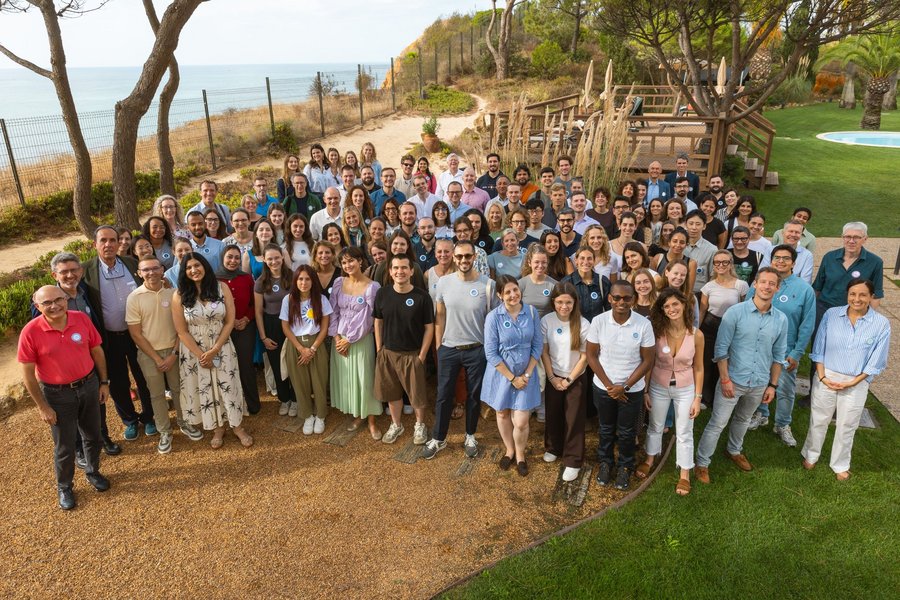
From October 4 to 9, 2026, more than 70 early-career researchers and international experts gathered in the Algarve, Portugal, for the tenth Cancer Core Europe (CCE) Summer School. The event focused on current developments in translational cancer research and interdisciplinary exchange. How do new findings make their way from the lab to patients? What opportunities does artificial intelligence offer in cancer medicine? And how can patients help shape research? Participants addressed these and many other questions through lectures, workshops, and discussions.
The program ranged from cancer prevention and tumor biology to new therapeutic approaches, clinical trials, and digital technologies in oncology. More than 25 expert presentations provided insights into current research projects at leading European cancer centers. Practical workshops focused on the analysis of molecular cancer data, the development of new drugs, and the use of artificial intelligence in medicine. In addition, participants received guidance on managing stress and building resilience in their daily research work.
Key Contributions from Heidelberg Scientists
Bruno Köhler (University Medical Center Schleswig-Holstein, NCT Heidelberg, German Cancer Research Center (DKFZ)) played a central role: as chair of the international Scientific Committee, he was responsible, together with its members, for the scientific direction of the Summer School. Other Heidelberg researchers actively contributed to the program with presentations and workshops.
Michael Hoffmeister (DKFZ, DKTK) presented new approaches to the prevention and early detection of colorectal cancer. Stefan Fröhling (Managing Director of NCT Heidelberg, DKFZ, DKTK), together with international colleagues, demonstrated in a workshop the path new active substances take from the laboratory to clinical application.
Another focus was artificial intelligence (AI) in cancer medicine. Jakob Nikolas Kather (UKHD, Heidelberg University, NCT Heidelberg, DKTK) presented potential applications of large AI language models and AI agents and explored these in greater depth during a hands-on workshop with his colleagues Narmin Ghaffari Laleh and Srividhya Sainath. Markus Herrmann (Heidelberg University, NCT Heidelberg) addressed ethical issues surrounding the use of AI.
Patient involvement played a special role: for the first time, patient representatives were also part of the Scientific Committee. Their perspective was present throughout the week in lectures, workshops, and discussions. Cindy Körner, a patient representative on the NCT Heidelberg Patient Research Council, shared the perspective of those affected and discussed with participants how patients can actively shape cancer research. Priya Chudasama (DKFZ, NCT Heidelberg) enriched the discussion with insights from practical research experience.
Exchange on Equal Footing
Just as important as the technical insights was the personal exchange. Early-career researchers presented their projects in short talks and poster sessions and received direct feedback from international experts and other participants.
The speakers participated in discussions, reviewed posters, and were available during informal exchange sessions to answer questions about research projects and scientific career paths. For the first time, presentations by industry representatives also complemented the program, highlighting the importance of collaboration between academic research and industry in the development of new cancer therapies.
“What makes the Summer School special is the direct exchange between young researchers and leading international experts on an equal footing. It’s not just about passing on knowledge, but about developing ideas together, learning from one another, and forging connections that can lead to long-term scientific collaborations,” says Bruno Köhler.
The NCT Heidelberg also made an important contribution to the practical organization of the Summer School: Anna Lück and Petra Oberrauch played a key role in preparing and carrying out the event. Financial support for the event came from, among others, the DKTK as a long-standing partner, the Monika Kutzner Foundation, and other academic partners and industry sponsors.
Further insights into the 2026 Summer School are available on the CCE website. https://www.cancercoreeurope.eu/cce-summer-school-10-editions-connecting/
With Heart and Hand: Heart-Shaped Pillows for Breast Cancer Patients at NCT Heidelberg
Beats Against Cancer: The Frank Dupree Trio Plays for the NCT Heidelberg