


About us
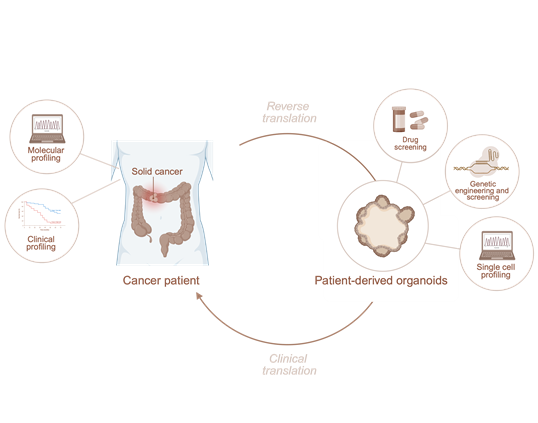
Our research group consists of scientists with backgrounds in medicine and biology who are passionate about experimental research and multidimensional data analysis. We are dedicated to the comprehensive molecular characterization of solid tumors with the goal of better understanding their biological diversity and utilizing it therapeutically. To this end, we combine state-of-the-art single-cell technologies, functional genetic and drug screens, and molecular data analysis. Patient-derived tumor models that best reflect the heterogeneity of patient tumors are used for functional experiments to identify new targets, define predictive biomarkers for treatment response, elucidate mechanisms of treatment resistance, and develop effective treatment strategies. Promising approaches are systematically translated into clinical applications. The focus is fundamentally on cross-entity therapeutic approaches, with a current emphasis on gastrointestinal and head and neck tumors.
Functional and molecular characterization of patient-derived colorectal carcinoma models at the single-cell level
We analyze the functional role of individual cells in colorectal carcinomas by labeling them with genetic barcodes. We investigate these labeled cells in three-dimensional spheroid and organoid models under chemotherapy treatment for resistance and in xenograft models regarding their role in tumor growth and metastasis in vivo using barcode and simultaneous single-cell RNA sequencing.
Characterization and clinical translation of an in-house CDK12/CDK13 inhibitor
Using high-throughput compound screening, we identify new therapeutic compounds, characterize target structures, and evaluate rational combination therapies. A key focus is on the preclinical characterization of a CDK12/CDK13 inhibitor, in the development of which we were involved, for the treatment of pediatric and adult patients with cancer. Artificial intelligence-supported “multiomics” analyses are used to develop predictive, complex biomarkers for forecasting treatment responses.
YAP/TAZ activity as a driver of resistance development and cross-entity therapeutic vulnerability
Another focus is on inhibitors of the transcriptional activators YAP and TAZ. Both play crucial roles in solid tumors regarding treatment resistance and tumor progression. We aim to better understand in which tumors YAP/TAZ inhibition is promising and how it can be used to overcome treatment resistance. To this end, we analyze YAP/TAZ activity in solid tumor entities using target gene signatures and responses to pharmacological or genetic YAP/TAZ inhibition in patient-derived tumor models.
Resistance mechanisms of NRG1-driven solid tumors to ERBB-targeted therapies
We investigate the molecular causes of resistance development to ERBB2/ERBB3-targeted therapies in NRG1-driven tumors using genome-wide, CRISPR/Cas9-based genetic screens. Based on this, we are developing targeted strategies to overcome resistance, which we aim to test for efficacy as part of the DKFZ/NCT/DKTK MASTER study (https://www.nct-heidelberg.de/fmaster).
Our research projects are driven by questions directly related to the treatment of cancer patients. Conversely, our findings are intended to inform patient diagnosis and treatment as much as possible in the future. To facilitate this connection, we are participating in molecular-based Phase I–III clinical trials at the NCT Heidelberg:
Molecularly Aided Stratification for Tumor Eradication Research (DKFZ/NCT/DKTK MASTER, NCT05852522) – Multicenter observational study on biology-driven stratification of adults with rare cancers
NECVAX-NEO1-02-INT (NCT06631079) – Mutant-based vaccination in combination with checkpoint inhibition in recurrent/metastatic squamous cell carcinoma of the head and neck (Phase I/II)
BNT113-01 (NCT04534205) – mRNA-based vaccine viral oncoproteins in combination with checkpoint inhibition in HPV-associated recurrent/metastatic squamous cell carcinoma of the head and neck (Phase II/III)
OrigAMI-2/3 (NCT06662786, NCT06750094) – Amivantamab (bispecific antibody against EGFR and MET) in combination with chemotherapy in recurrent/metastatic RAS/RAF wild-type colorectal cancer (Phase III)
Hanno Glimm/Claudia Ball (NCT Dresden)
Frank Westermann (KiTZ und DKFZ, Heidelberg)
Stefan Pfister/Marc Zuckermann (KiTZ und DKFZ, Heidelberg)
Bernhard Küster/Annika Schneider (TU München)
Michael Dill (Heidelberg University Hospital und DKFZ)
Marcel Trautmann (University Hospital Münster)
- Michal Harel/Yehonatan Elon (Binyamina-Giv'at Ada, Israel)
Dr. med. Sebastian Dieter
Clinical Translation
sebastian.dieter(at)nct-heidelberg.de

Michael Wegert-Verhoeven
Clinical Translation
michael.wegert(at)nct-heidelberg.de

Mathea Fransisca
mathea.fransisca(at)dkfz-heidelberg.de
Sylvia Martin
sylvia.martin(at)nct-heidelberg.de
Maximilian Bullemer
PhD Candidate
maximilian.bullemer(at)nct-heidelberg.de
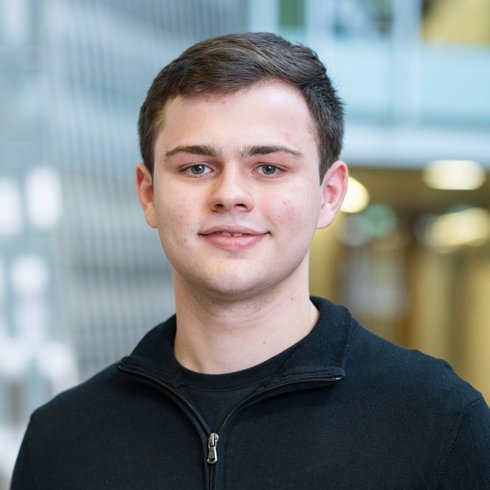
Erik Kaiser
MD Candidate
erik.kaiser(at)nct-heidelberg.de
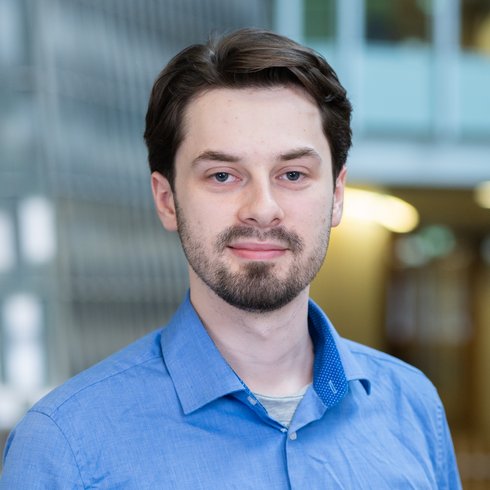
Constantin Zehender
PhD Candidate
constantin.zehender(at)nct-heidelberg.de
Else Kröner Excellence Fellowship (2022, awarded to Sebastian Dieter)
Vincenz Czerny Prize (German Society for Hematology and Medical Oncology [DGHO], 2012, awarded to Sebastian Dieter)
Pezcoller Foundation Scholar-in-Training Award (American Association for Cancer Research [AACR], 2011, awarded to Sebastian Dieter)
Ruprecht-Karls Prize (University of Heidelberg, 2014, awarded to Sebastian Dieter)
Doctoral Student Award (DGHO, to Lino Möhrmann, alumnus, former medical doctoral student in the research group)
Dieter, S. M.*, Ball, C. R.*, Hoffmann, C. M.*, Nowrouzi, A., Herbst, F. et al. (2011). Distinct types of tumor-initiating cells form human colon cancer tumors and metastases. Cell Stem Cell 9, 357-365.
Dieter, S. M., Glimm, H., and Ball, C. R. (2017). Colorectal cancer-initiating cells caught in the act. EMBO Mol Med 9, 856-858.
Dieter, S. M.*, Heining, C.*, Agaimy, A., Huebschmann, D., Bonekamp, D. et al. (2017). Mutant KIT as imatinib-sensitive target in metastatic sinonasal carcinoma. Ann Oncol 28, 142-148.
Dieter, S. M., Siegl, C., Codo, P. L., Huerta, M., Ostermann-Parucha, A. L. et al. (2021). Degradation of CCNK/CDK12 is a druggable vulnerability of colorectal cancer. Cell Rep 36, 109394.
Dieter, S. M., Lovecchio, D., Pataskar, A., Zowada, M. K., Korner et al. (2022). Suppression of heparan sulfation re-sensitizes YAP1-driven melanoma to MAPK pathway inhibitors. Oncogene. 41(32), 3953-3968.