


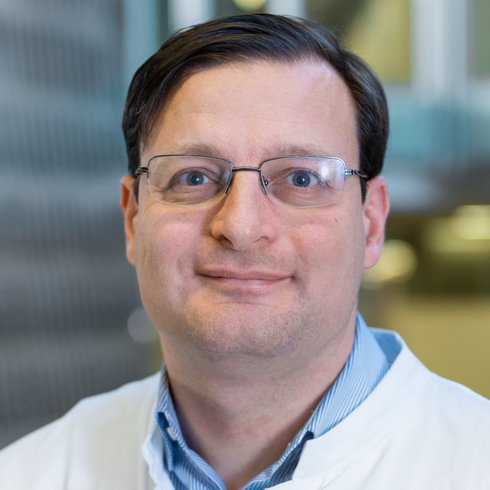
PD. Dr. Tilmann Bochtler
Clinic for Medical Oncology
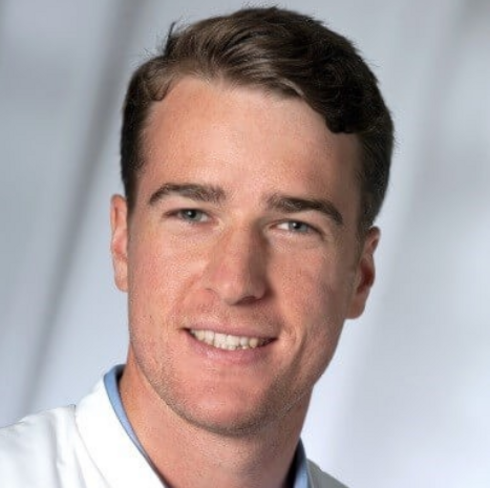
PD Dr. Thomas Held
Center for Radiation Oncology and Radiotherapy
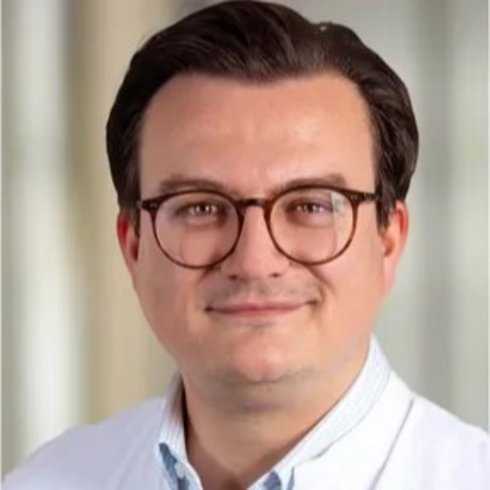
PD Dr. Dr. Reinald Kühle
Clinic for Oral and Maxillofacial Surgery
PD Dr. Dr. Julius Moratin
Clinic for Oral and Maxillofacial Surgery
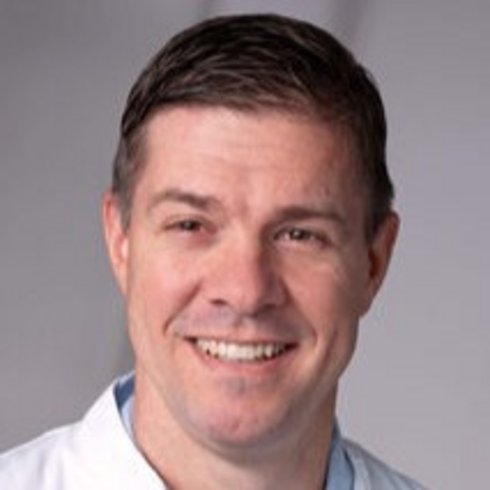
Dr. Rubens Thölken
Department of Otorhinolaryngology (ENT)
For Physicians: Referral of new patients
In order for us to schedule your patients into the appropriate consultation hours, please send us the completed registration form for new patients and existing diagnostic findings by fax or e-mail in advance. The registration form contains additional information for your patients and can be downloaded as a PDF file. After receiving your fax or e-mail, we will contact your practice or the patient directly.
Information on studies that are currently in the recruiting phase can be found on our website (also available at www.nct-heidelberg.de/studien). In addition, the senior physicians responsible for the entity are happy to provide information on further study details.
Patient registration for referring physicians
Patient Center NCT Heidelberg
- Phone: +49 6221 56-5924
Monday–Thursday 8:00–16:00, Friday 8:00–14:30 - Fax: +49 6221 56-4757
- E-mail: nct.patientenzentrum(at)med.uni-heidelberg.de
- Registration form for referring physicians (PDF-file, only available in German)
Information about head and neck tumors
Malignant tumors of the head and neck are among the six most common cancer types worldwide and are newly diagnosed in more than 15,500 patients per year alone in Germany. More than 90% of all cases are so-called head and neck squamous-cell carcinoma (HNSCC). In approximately over half of all patients, the tumor is diagnosed for the first time in already advanced stages (III and IV).
Nowadays, as long as the tumor is restricted to the head and neck area, it is possible to achieve a permanent cure in approximately 30-40% of all cases, even in advanced stages, by means of modern multimodal treatment methods, such as surgery, and/or radiation, or chemotherapy. If the tumor has already spread into other areas of the body, a complete cure cannot be achieved anymore. In these specific cases, a chemotherapy and/or antibody therapy may help to inhibit tumor growth for as long as possible (palliative chemotherapy/immunotherapy).
Besides squamous-cell carcinoma, another group of malignant head and neck tumors exists, which develop from transformed cells of the salivary glands. Overall, these tumors seldom occur but they are biologically very diverse, which makes the definition of an optimal individualized treatment concept especially crucial. In Heidelberg, specific study protocols have been developed for the most common malignant tumor of the salivary glands (adenoid cystic carcinoma, a form of adenocarcinoma) in order to also offer patients with these rare head and neck tumors modern treatment concepts (for example, with heavy ions) within controlled clinical trials.
Treatment at the NCT Heidelberg
The Heidelberg Head and Neck Tumor Center offers all modern possibilities for diagnosis and treatment of these tumor diseases.
At NCT Heidelberg, the procedures for diagnostics and treatment of patients with head and neck tumors are precisely defined. The definition of these standard operating procedures (SOPs) is established by the specialists of the Heidelberg Head and Neck Tumor Center and is updated at least once a year taking into account the current international standards.
In addition, the Heidelberg Head and Neck Tumor Center also offers a weekly interdisciplinary special consultation session for patients with head and neck cancer. Here, patients who are not eligible for a standardized treatment (for example, rare head and neck tumors, recurring tumors, independent second tumor) receive an interdisciplinary consultation and are referred to other cooperating departments for diagnosis and treatment. Each consultation session is attended by one senior physician of ENT, oral, and maxillofacial surgery; radiation and medical oncology. Furthermore, every treatment decision for a patient with a tumor that cannot be treated according to SOP is also discussed interdisciplinarily in a weekly tumor board meeting for head and neck tumors.
Examination methods/diagnostics
- Panendoscopy, i. e., endoscopy of the larynx, upper trachea, and esophagus (with or without anesthesia), possibly with sampling of tissue
- Imaging (CT, MRI, Sonography, PET-CT)
- Search for sources of infections in the mouth and jaw area
Therapeutic procedures
- Tumor resection and reconstruction by means of autologous tissue transplantation or epitheses, as well as skull base and navigation-assisted surgery
- Precision radiation therapy (IMRT, IGRT, heavy-ion treatment, brachytherapy)
- Systemic chemotherapy and/or immunotherapy
Aftercare
The department responsible for primary treatment coordinates aftercare following the completion of treatment.