

New Findings on Acute Leukemias: Specific Mutations Provide Targets for More Targeted Therapies
Researchers at the NCT Heidelberg and the German Cancer Research Center (DKFZ) have, for the first time, systematically determined how specific mutations promote acute myeloid leukemias. The results show why IDH1- and IDH2-mutated leukemias develop differently despite similar molecular mechanisms—and open up new approaches for diagnostics and targeted therapies.
The National Center for Tumor Diseases (NCT) Heidelberg is a joint institution of the German Cancer Research Center (DKFZ), the Heidelberg University Hospital (UKHD), the Heidelberg Medical Faculty of the Heidelberg University and the Thoraxklinik Heidelberg.
Mutations in the genes encoding the enzymes IDH1 and IDH2 have long been considered important molecular alterations in acute leukemias. Until now, it was assumed that alterations in both genes trigger largely similar disease mechanisms. Researchers at the National Center for Tumor Diseases (NCT) in Heidelberg and the German Cancer Research Center (DKFZ) have now, for the first time, systematically deciphered how IDH1 mutations contribute to the development of diseases of the blood-forming cells and acute leukemias. In doing so, they have provided important new insights into the biology of IDH1-mutated leukemias and will help improve their diagnosis and treatment in the future.
The researchers were able to show that leukemias with IDH1 and IDH2 mutations differ significantly despite many similarities. A key factor is that the two genes are active in different types of hematopoietic cells, and mutations therefore exert their disease-promoting effects in different blood progenitor cells. The study found that IDH1 mutations specifically block the normal maturation of infection-fighting white blood cells—known as neutrophils—in both animal models and affected patients. As a result, patients with IDH1-mutated leukemia experience a characteristic loss of these cells, which is not observed in IDH2-mutated leukemia. At the same time, the researchers were able to demonstrate that pharmacologically inhibiting only the mutated IDH1 enzyme was not sufficient to lift the maturation block. Only the combination with a drug that inhibits DNA methylation restored normal maturation.
Daniel Lipka, head of the Translational Cancer Epigenomics Section in the Department of Translational Medical Oncology at the DKFZ and the NCT Heidelberg, is the senior author of the study. He says: “Our results show for the first time why IDH1- and IDH2-mutated leukemias are distinct diseases and why clinically used targeted combination therapies can be effective in IDH1-mutated leukemias.”
These findings could be particularly relevant for countries with limited access to modern molecular diagnostics. Since IDH1-mutated leukemias are often associated with significantly reduced neutrophil counts, patients with this characteristic could be identified through a simple blood test and specifically screened for corresponding mutations. This would enable more resource-efficient diagnostics and facilitate access to molecularly targeted therapies for affected patients.
In the long term, the researchers now plan to investigate additional molecular processes that contribute to disease development independently of the actual enzymatic activity of the IDH1 mutation. This could lead to new therapeutic approaches for early precursors of acute leukemias that help prevent disease progression.
Publication:
Mariam Hakobyan, Jens Langstein, María José Ramos Medina, Emely Kleinert, Maximilian Schönung, Mark Hartmann, Hannah Rohdjess, Jessica Wojtarowicz, Sina Staeble, Melissa Türe, Yasmine Pobiedonoscew, Rainer Claus, Lars Bullinger, Christopher C. Oakes, Katharina Zoldan, Michael Cross, Uwe Platzbecker, Niclas Kneisel, Simon Raffel, Ulrich Germing, Gregor Hoermann, Simon Haas, Karsten Rippe, Stefan Fröhling, Stefan Pusch, Christoph Plass, Michael D. Milsom, Daniel B. Lipka: Mutant IDH1 blocks neutropoiesis by repressing myeloid progenitor programs; Blood; https://doi.org/10.1182/blood.2025031268
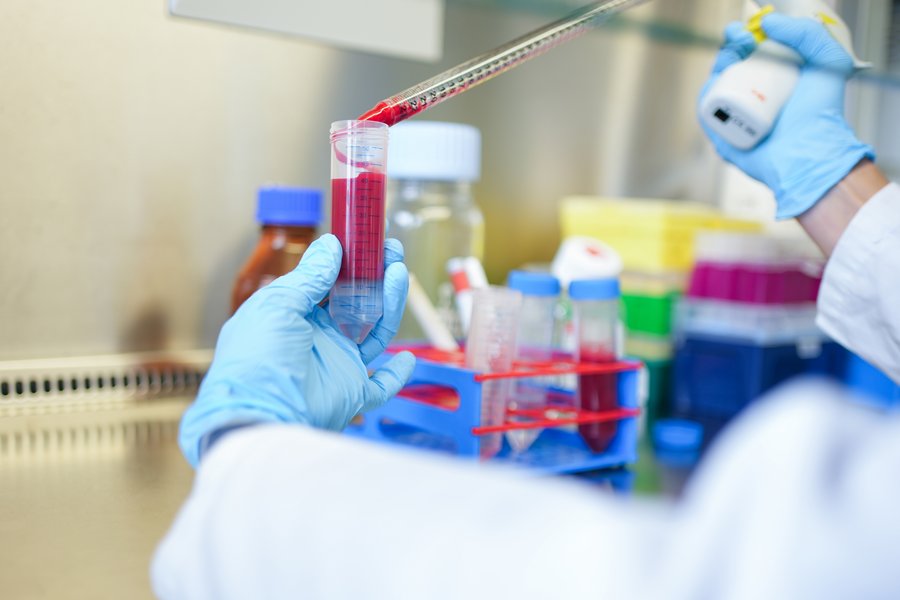
An image accompanying this press release is available free of charge at:
https://www.nct-heidelberg.de/fileadmin/media/nct-heidelberg/news/pressemitteilungen/NCT_Heidelberg_PM_IDH.jpg
Terms of use for images accompanying press releases
Use is free of charge. The NCT Heidelberg permits one-time use in connection with reporting on the topic of the press release. Please cite the copyright “NCT Heidelberg/Marius Stark” as the image credit. The image material may only be passed on to third parties after prior consultation with NCT Communications (tel.: +49 6221 42-56311272, email: martin.staiger@nct-heidelberg.de). Use for commercial purposes is prohibited.
Press contact:
Dr. Martin Staiger
National Center for Tumor Diseases (NCT) Heidelberg
Communications and Events
Im Neuenheimer Feld 460
69120 Heidelberg, Germany
Tel.: +49 6221 56-311272
Email: martin.staiger(at)nct-heidelberg.de
www.nct-heidelberg.de
The National Center for Tumor Diseases (NCT) Heidelberg
The National Center for Tumor Diseases (NCT) Heidelberg is a joint institution of the German Cancer Research Center (DKFZ), the University Hospital Heidelberg (UKHD), the Heidelberg Medical Faculty of the Heidelberg University and the Thoraxklinik Heidelberg. The aim of the NCT Heidelberg is to transfer promising approaches from cancer research into clinical practice as quickly as possible, and thus to benefit patients. This applies to both diagnosis and treatment, in aftercare or prevention. Participation in clinical studies opens up access to innovative therapies. The NCT Heidelberg is thus a leader in transferring new research results from the laboratory to the clinic The NCT Heidelberg, founded in 2004, is part of the NCT with further locations in Berlin, Dresden, SouthWest (Tübingen-Stuttgart/Ulm), WERA (Würzburg, Erlangen, Regensburg, Augsburg) and West (Essen/Cologne).
German Cancer Research Center (DKFZ)
With more than 3,000 employees, the German Cancer Research Center (Deutsches Krebsforschungszentrum, DKFZ) is Germany’s largest biomedical research institute. DKFZ scientists identify cancer risk factors, investigate how cancer progresses and develop new cancer prevention strategies. They are also developing new methods to diagnose tumors more precisely and treat cancer patients more successfully. The DKFZ's Cancer Information Service (KID) provides patients, interested citizens and experts with individual answers to questions relating to cancer.
To transfer promising approaches from cancer research to the clinic and thus improve the prognosis of cancer patients, the DKFZ cooperates with excellent research institutions and university hospitals throughout Germany:
- National Center for Tumor Diseases (NCT, 6 sites)
- German Cancer Consortium (DKTK, 8 sites)
- Hopp Children's Cancer Center (KiTZ) Heidelberg
- Helmholtz Institute for Translational Oncology (HI-TRON Mainz) - A Helmholtz Institute of the DKFZ
- DKFZ-Hector Cancer Institute at the University Medical Center Mannheim
- National Cancer Prevention Center (jointly with German Cancer Aid)
The DKFZ is 90 percent financed by the Federal Ministry of Research, Technology and Space and 10 percent by the state of Baden-Württemberg. The DKFZ is a member of the Helmholtz Association of German Research Centers.
Heidelberg University Hospital and Faculty of Medicine: Internationally Renowned Patient Care, Research and Teaching
Heidelberg University Hospital (Universitätsklinikum Heidelberg, UKHD) is one of the largest and most prestigious medical centers in Germany. The Medical Faculty of Heidelberg University (Medizinische Fakultät Heidelberg, MFHD) belongs to the internationally renowned biomedical research institutions in Europe. Both institutions have the common goal of developing new therapies and implementing them rapidly for patients. Heidelberg University Hospital and the Medical Faculty of Heidelberg University employs around 14.500 employees and is committed to providing trainings and qualifications. Every year, around 86,000 patients and more than 1.100.000 outpatient cases are treated in more than 50 clinical departments with almost 2.500 beds.
Together with the German Cancer Research Center (Deutsches Krebsforschungszentrum, DKFZ) and the German Cancer Aid, the UKHD established the first National Center for Tumor Diseases (NCT) in Heidelberg. The goal is to provide care at the highest level as an oncology center of excellence and to rapidly transfer promising approaches from cancer research to the hospital. In addition, the UKHD operates in partnership with the DKFZ and the University of Heidelberg the Hopp Children’s Cancer center Heidelberg (KiTZ), a unique and nationally known therapy and research center for oncological and hematological diseases in children and adolescents.
The Heidelberg Curriculum Medicinale (HeiCuMed) is one of the top medical training programs in Germany. Currently, there are about 4.000 future physicians studying in Heidelberg.